Enhancing Digital Astronomy Projects with the Girl and Telescopes Flat Vector Icon
In the rapidly evolving landscape of web design and application development, visual communication plays a pivotal role in user engagement. Designers and developers are constantly seeking assets that not only look aesthetically pleasing but also convey specific concepts instantly. One such asset that has gained traction in educational, scientific, and hobbyist digital spaces is the Girl and Telescopes Flat Vector Icon. This specific illustration serves as more than just a decorative element; it is a functional tool for representing astronomy, observation, curiosity, and scientific exploration.
Understanding how to effectively integrate this icon into your digital projects requires a grasp of its symbolic weight, technical advantages, and practical applications. Whether you are building an educational platform for young astronomers, designing a mobile app for stargazing enthusiasts, or creating marketing materials for a science museum, this vector symbol offers a versatile solution. This article explores the utility of the Girl and Telescopes Flat Vector Icon, addressing common design challenges and providing actionable strategies for implementation.
Defining the Asset: More Than Just an Image
The Girl and Telescopes Flat Vector Icon is a digital graphic resource typically created in vector formats such as SVG (Scalable Vector Graphics), AI, or EPS. Unlike raster images (like JPEGs or PNGs), vector icons are composed of mathematical paths rather than pixels. This fundamental difference allows the image to be scaled to any size without losing clarity or sharpness. The "flat" design style refers to a minimalist aesthetic characterized by clean lines, solid colors, and a lack of three-dimensional effects like shadows or gradients, which ensures high readability across various screen resolutions.
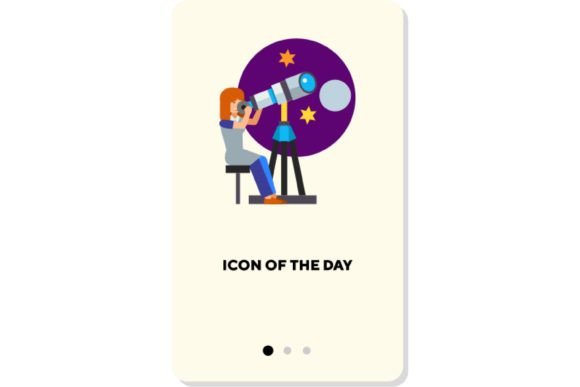
The subject matter—a girl looking through a telescope—is highly symbolic. It represents the act of observation, the pursuit of knowledge, and the wonder of the cosmos. By featuring a female figure, the icon also promotes inclusivity in STEM (Science, Technology, Engineering, and Mathematics) fields, challenging historical stereotypes that often depict astronomy as a male-dominated hobby. The "isolated outline sign" aspect means the icon is usually presented on a transparent background, making it easy to layer over different colored backgrounds or integrate seamlessly into complex UI layouts.
Addressing Design Challenges and User Needs
Designers often face several challenges when selecting icons for niche topics like astronomy. Standard icon libraries may offer generic stars or planets, but they frequently lack human elements that convey emotion and activity. Here is how the Girl and Telescopes Flat Vector Icon addresses these specific needs:
- Humanizing Abstract Concepts: Astronomy can feel distant and abstract. Adding a human figure creates an emotional connection, suggesting that space exploration is an accessible, human endeavor.
- Ensuring Scalability: Modern web design requires responsive elements. An icon must look crisp on a massive desktop monitor and a tiny smartwatch screen. Vector formats solve this by allowing infinite scaling.
- Maintaining Visual Consistency: Apps and websites need a cohesive design language. Flat vector icons are easier to recolor and style to match brand guidelines compared to detailed illustrations or photos.
- Promoting Inclusivity: Many legacy science icons default to male figures. Using a girl in the icon signals a welcoming environment for diverse audiences, which is crucial for educational platforms aiming to inspire young girls in science.
Practical Applications in Web and App Design
The versatility of the Girl and Telescopes Flat Vector Icon allows it to serve multiple functions across different digital platforms. Its primary value lies in its ability to communicate the concept of "looking," "discovering," or "learning" at a glance.
Educational Platforms and E-Learning
For online courses focused on physics, astronomy, or general science, this icon can serve as a module marker. For instance, it could represent a section on "Observational Astronomy" or "Using Basic Equipment." The visual cue helps students navigate content quickly. Furthermore, using a relatable figure like a young girl can make the subject matter feel less intimidating to beginner learners.
Mobile Applications for Stargazing
Stargazing apps often rely on intuitive navigation. The icon can be used as a button for features related to identifying constellations, setting up telescope equipment, or accessing tutorials. Because flat icons are lightweight, they contribute to faster load times, which is critical for mobile users who may be accessing the app in remote locations with limited connectivity.
Marketing and Branding for Science Centers
Museums, planetariums, and science camps can use this icon in their digital marketing campaigns. It works well in email newsletters, social media graphics, and website headers to promote events related to night sky viewing. The friendly, approachable style of the flat vector aligns well with family-oriented branding.
Implementation Strategies and Best Practices
To maximize the effectiveness of the Girl and Telescopes Flat Vector Icon, designers should consider several technical and aesthetic factors during implementation.
Color Customization: One of the greatest advantages of vector files is the ease of editing. You should adapt the color palette of the icon to match your brand identity. If your app uses a dark mode interface, ensure the icon has sufficient contrast. You might invert the colors or use bright accent colors for the telescope lens to draw attention.
Sizing and Spacing: Even though vectors scale infinitely, legibility is key. Ensure that the details of the telescope and the figure are not lost when the icon is reduced to small sizes, such as in a navigation bar. Adequate whitespace around the icon prevents it from feeling cluttered and improves touch target accuracy on mobile devices.
Accessibility Considerations: Always include appropriate alt text when using the icon on the web. For example, use alt="Girl looking through a telescope" to ensure screen readers can describe the image to visually impaired users. If the icon is purely decorative, it should be hidden from screen readers to avoid unnecessary noise.
Different Approaches for Different Users
Various stakeholders will approach the use of this icon differently based on their goals:
- UI/UX Designers: Focus on integration. They will prioritize how the icon fits into the overall design system, ensuring consistent stroke weights and corner radii with other icons in the set.
- Content Creators: Focus on storytelling. They might use the icon in blog posts or articles about getting started in astronomy to break up text and add visual interest.
- Developers: Focus on performance. They will prefer SVG code embedded directly into HTML to reduce HTTP requests, ensuring the page loads quickly.
- Educators: Focus on representation. They will value the icon for its ability to inspire female students and provide a visual anchor for lessons on scientific observation.
Conclusion
The Girl and Telescopes Flat Vector Icon is a powerful asset for anyone looking to enhance their digital presence in the fields of science, education, or hobbyist astronomy. By combining technical efficiency with meaningful symbolism, it addresses the need for scalable, inclusive, and clear visual communication. Whether you are designing a complex educational platform or a simple landing page for a local stargazing event, this icon offers a professional and engaging solution. By following best practices in customization and accessibility, you can ensure that this visual element not only looks great but also serves its purpose effectively, guiding users toward a deeper appreciation of the skies above.