Applause Flat Icon: Human Palms, Clapping as a Universal Digital Signal
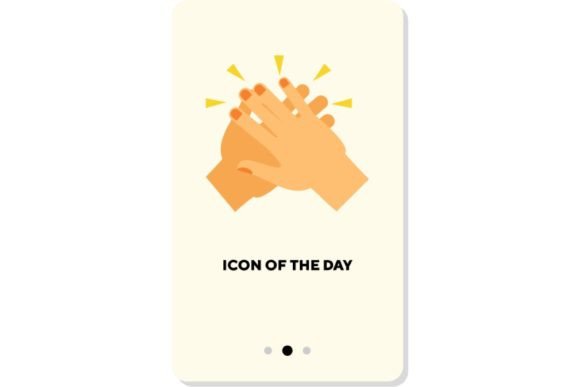
In the rapidly evolving landscape of digital communication, visual cues have replaced many traditional textual interactions. Among these, the applause flat icon has emerged as a critical element in user interface design. Representing human palms clapping, this simple yet powerful graphic transcends language barriers to convey appreciation, support, and approval. Whether used in a corporate presentation, a social media platform, or an educational app, the image of clapping hands serves as an immediate emotional connector between the creator and the audience.
The relevance of this symbol extends far beyond mere decoration. As remote work becomes standard and digital interactions dominate our daily lives, the need for clear, non-verbal feedback mechanisms has intensified. The applause flat icon fills this gap by providing a universally understood sign of validation. It is not just a vector illustration; it is a functional tool that enhances user experience (UX) by making digital spaces feel more responsive and human-centric.
The Evolution of Visual Feedback in Web Design
Historically, web design relied heavily on text-based buttons such as "Like," "Agree," or "Submit." However, as screen real estate became premium and attention spans shortened, designers sought more efficient ways to communicate intent. This shift gave rise to iconography, where complex ideas are distilled into simple geometric shapes. The human palms, clapping hands motif is a prime example of this evolution. It captures a physical action—applauding—and translates it into a static, scalable vector that retains its meaning across different contexts.
This transition reflects broader changes in user expectations. Modern users prefer intuitive interfaces that require minimal cognitive load. When a user sees an applause isolated sign, they instantly recognize its purpose without needing to read a label. This immediacy is crucial in mobile-first designs, where space is limited and interaction speed is paramount. The flat design style, characterized by clean lines and solid colors, further enhances this clarity by removing unnecessary shadows and gradients that can distract from the core message.
Moreover, the adoption of flat icons aligns with the global trend toward minimalism in digital aesthetics. By stripping away decorative elements, designers focus on functionality and readability. The applause flat icon fits seamlessly into this paradigm, offering a crisp, modern look that complements contemporary web layouts. Its versatility allows it to be resized without loss of quality, making it ideal for everything from tiny favicon indicators to large hero section graphics.
Communication, Appreciation, and Support Concepts
At its core, the concept behind the clapping hands icon is rooted in human psychology. Applause is a primal form of social reinforcement. It signals agreement, celebration, and gratitude. In digital environments, replicating this sentiment helps bridge the emotional distance inherent in online interactions. For marketers and content creators, integrating an applause flat icon into their platforms can significantly boost engagement rates by encouraging positive feedback loops.
Consider the context of online learning platforms. Educators often struggle to gauge student satisfaction in virtual classrooms. By incorporating a clapping hands button, instructors can receive instant, non-intrusive feedback during lectures. This small addition fosters a sense of community and support, making students feel heard and valued. Similarly, in corporate communication tools, employees can use the icon to acknowledge colleagues' achievements, reinforcing a culture of appreciation without the formality of written emails.
The semantic richness of the human palms, clapping symbol also makes it valuable for accessibility initiatives. For users with reading difficulties or those who speak different languages, visual symbols provide a reliable alternative to text. When designed with high contrast and clear outlines, these icons ensure that the message of support is accessible to a wider audience. This inclusivity is not just a ethical imperative but also a strategic advantage, expanding the reach of digital products to diverse user groups.
Practical Applications for Professionals and Creators
For web designers, developers, and business owners, understanding how to effectively deploy the applause flat icon can enhance both aesthetics and functionality. Here are several practical scenarios where this vector illustration adds significant value:
- Social Proof and Testimonials: Placing a clapping hands icon next to customer reviews or case studies visually reinforces the positive sentiment. It acts as a subtle cue that others approve of the service or product, increasing trust among potential clients.
- Interactive Feedback Mechanisms: In apps and websites, replacing standard "thumbs up" buttons with applause icons can differentiate the brand voice. It suggests a higher level of enthusiasm and celebration, which may be more appropriate for creative portfolios, performance platforms, or achievement-based games.
- Email Marketing Campaigns: Including a small applause graphic in thank-you emails or milestone notifications adds a personal touch. It transforms a routine transactional message into a moment of genuine connection, improving customer retention and loyalty.
- Presentation Decks: Entrepreneurs and consultants can use the icon in slide decks to highlight key successes or team accomplishments. It breaks up text-heavy slides and draws attention to positive outcomes, keeping the audience engaged.
When selecting a vector illustration for these purposes, it is essential to choose a style that matches the overall brand identity. A playful, rounded clap icon might suit a children’s educational app, while a sleek, geometric version would better fit a fintech dashboard. Consistency in line weight, color palette, and corner radius ensures that the applause isolated sign feels like an integrated part of the design system rather than an afterthought.
Technical Considerations for Web Implementation
From a technical standpoint, using vector formats such as SVG (Scalable Vector Graphics) for the applause flat icon offers numerous advantages. Unlike raster images (JPEG, PNG), vectors remain sharp at any resolution, ensuring crisp display on high-density screens like Retina displays. This scalability is vital for responsive design, where icons must adapt to various device sizes without pixelation.
Furthermore, SVG files are typically smaller in file size compared to high-resolution bitmaps, contributing to faster page load times. Speed is a critical factor in SEO and user retention; even a fraction of a second delay can lead to increased bounce rates. By optimizing the code within the SVG file—removing unnecessary metadata and simplifying paths—developers can ensure that the human palms, clapping hands graphic loads instantly, enhancing the overall performance of the website.
Accessibility standards also dictate how these icons should be implemented. Developers must include appropriate ARIA (Accessible Rich Internet Applications) labels or alt text to describe the icon’s function to screen readers. For instance, labeling the element as "Applaud" or "Show Appreciation" ensures that visually impaired users understand the interactive element’s purpose. This attention to detail demonstrates a commitment to inclusive design, aligning with modern web standards and best practices.
Future Trends in Iconography and User Interaction
As technology advances, the role of static icons like the applause flat icon may evolve into more dynamic interactions. We are already seeing the rise of micro-interactions, where icons animate upon user engagement. A clapping hands icon might briefly animate with a slight bounce or color change when clicked, providing tactile feedback that enhances the sense of accomplishment. These subtle movements make digital interfaces feel more alive and responsive.
Additionally, the integration of augmented reality (AR) and virtual reality (VR) could expand the contextual use of applause symbols. In virtual meeting spaces, users might trigger a 3D representation of clapping hands to show support, creating a more immersive experience. While these technologies are still emerging, the foundational concept remains the same: the need for clear, universal signals of appreciation. The flat icon serves as the groundwork for these future innovations, establishing a visual language that users already understand.
Ultimately, the enduring popularity of the applause isolated sign lies in its simplicity and emotional resonance. It reminds us that behind every screen is a human being seeking connection and validation. By thoughtfully incorporating this symbol into web design, professionals can create more empathetic, engaging, and effective digital experiences. Whether you are a blogger looking to encourage comments, a business owner aiming to boost customer satisfaction, or a designer crafting the next great app, the power of a simple clap should not be underestimated.
In conclusion, the applause flat icon is more than just a graphic asset; it is a vital component of modern digital communication. Its ability to convey complex emotions quickly and universally makes it an indispensable tool for anyone involved in web design, marketing, or online community management. By understanding its historical context, practical applications, and technical requirements, users can leverage this symbol to foster deeper connections and drive meaningful engagement in their digital projects.